
In the competitive global food and beverage industry, packaging is far more than a simple container-it is a critical guardian of product quality, a key driver of brand image, and a decisive factor in market compliance and consumer trust. For exporters, brand owners, and packaging manufacturers alike, understanding the true purpose of packaging, mastering sustainable design trends, and implementing accurate barrier testing has become essential to reducing waste, extending shelf life, and meeting global green regulations. This guide breaks down the core logic of modern flexible packaging, from design principles to sustainability transitions and real-world testing solutions, to help you build more reliable, eco-friendly, and market-ready packaging systems.
I. The Core Purpose of Packaging & Principles of High-Performance Packaging Design
1. The Essential Functions of Modern Food Packaging
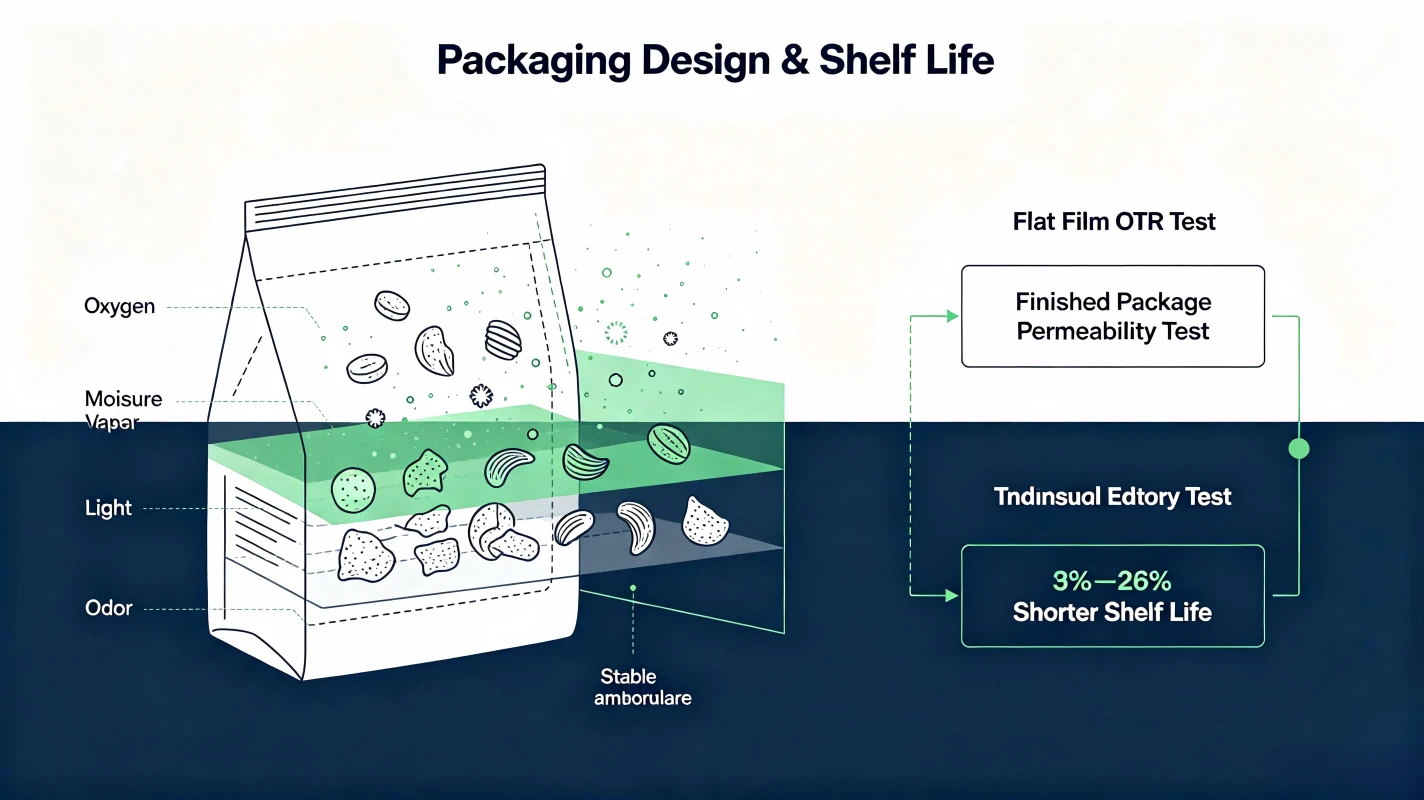
At its heart, food packaging exists to protect product integrity throughout the supply chain. Its most vital role lies in excellent barrier performance: effectively blocking oxygen, moisture vapor, light, and external odors from penetrating the package. By maintaining a stable modified atmosphere inside the package, packaging preserves food freshness, locks in original flavor and aroma, maintains visual appearance, and slows the growth of microorganisms and spoilage.
Beyond protection, today's packaging must also balance a wide range of practical and regulatory needs:
- Food safety: Non-toxic, odorless, and fully compliant with food-contact standards in target markets (EU, US, etc.)
- Environmental sustainability: Reduced material usage, improved recyclability, and lower carbon footprint
- Convenience: Easy to open, store, carry, and use, supporting both online and offline retail scenarios
- Customization: Brand-aligned design, clear information labeling, and enhanced shelf visibility
2. What Defines the "Optimal Packaging Design"
Truly optimized packaging design follows a strict, performance-first logic:
Under the premise of meeting the target shelf life required by the product and market, it uses the minimum amount of packaging materials to achieve the lowest possible carbon emissions.
A common misconception in the industry is relying solely on flat film data to judge packaging performance. In reality, the actual barrier effect of finished three-dimensional packages is often affected by overall sealing quality, edge penetration, heat-sealing flaws, and structural weaknesses. These real-world factors can significantly reduce barrier performance compared to theoretical film values, leading to unexpected quality deterioration during transportation and storage. Therefore, excellent packaging design must integrate material science, structural engineering, and actual application scenarios.
II. Trends in Sustainable Packaging & Industry Transition Challenges
Sustainability has evolved from an optional brand advantage into a mandatory global requirement. Driven by policies such as the EU's PPWR, brand sustainability commitments, and consumer demand for eco-friendly products, the packaging industry is undergoing a profound structural transformation.
1. The Dominant Trend: Monomaterial System Design
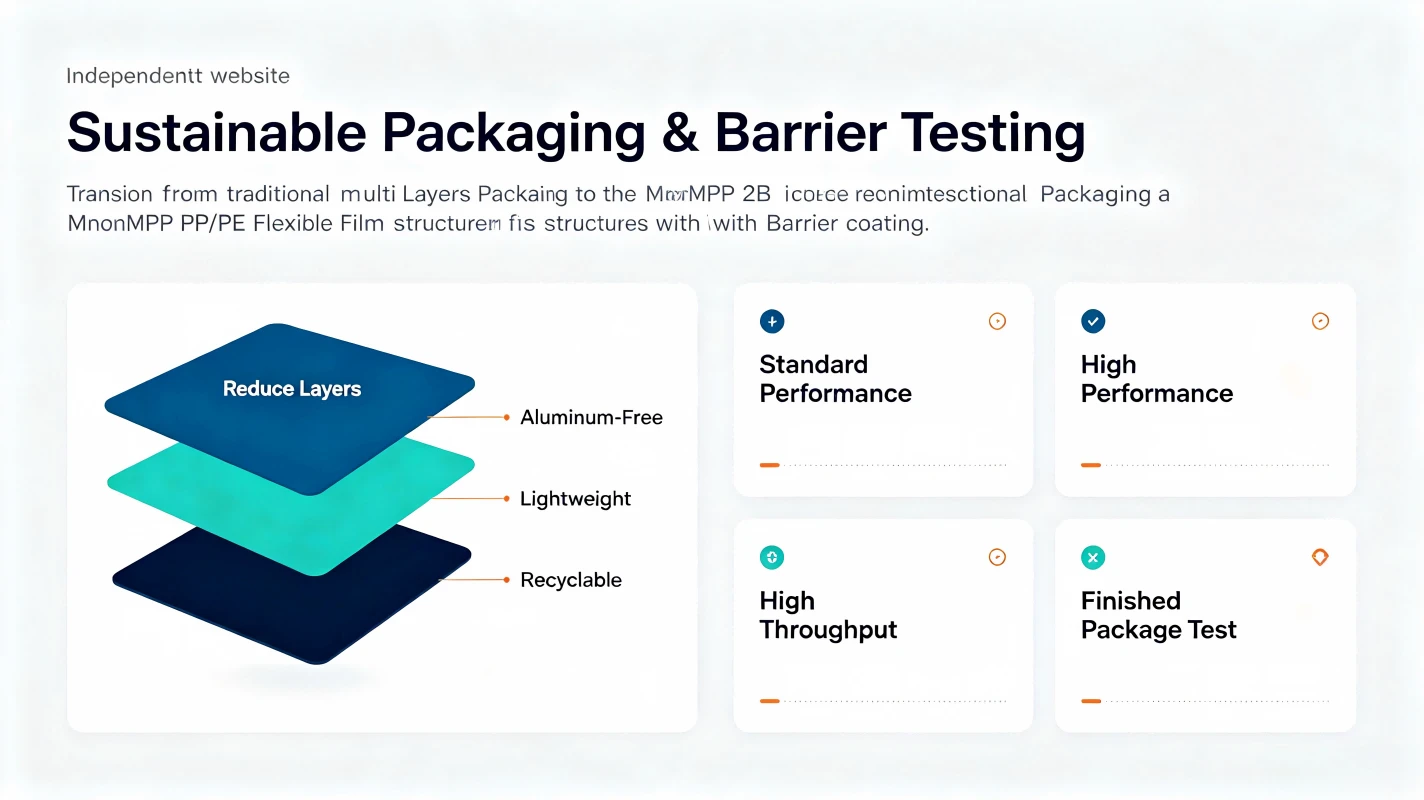
The core direction of sustainable flexible packaging is monomaterialization.
Typical solutions include PP/PE-based mono-structure composite films, which achieve a homogeneous material ratio of more than 90%, making them compatible with existing public recycling systems. Instead of traditional multi-layer, multi-material structures that are difficult to recycle, advanced barrier coatings are used to deliver the required oxygen and moisture resistance. This approach achieves both high barrier performance and true recyclability-resolving the long-standing conflict between protection and sustainability.
2. Unified Industry Transition Requirements
Across the global supply chain, a consistent set of green packaging goals has emerged:
- Layer reduction: Simplifying multi-layer structures to improve recyclability
- Aluminum-free design: Reducing or removing aluminum foil to enhance compatibility with plastic recycling streams
- Lightweighting: Reducing material thickness while maintaining mechanical and barrier performance
- Recyclable & compostable compatibility: Meeting standards for circular economy systems
Many leading global brands have set clear timelines, targeting 100% recyclable packaging across their product lines by 2025, pushing upstream packaging suppliers to accelerate technical iteration.
3. Common Pain Points in Sustainable Transition
Although the direction is clear, many enterprises still face practical challenges:
- Balancing monomaterial recyclability with sufficient barrier performance
- Ensuring new materials adapt to existing production lines without large-scale equipment investment
- Verifying whether real shelf-life performance matches theoretical lab data
- Complying with increasingly strict international recycling regulations
III. Case Study: Shelf-Life Prediction for Snack Food Flexible Packaging
To illustrate the gap between theoretical testing and real performance, we share a practical case focused on shelf-life calculation for snack food flexible packaging.
Industry Pain Point
Many manufacturers calculate product shelf life only by testing flat film barrier properties (such as OTR, MVTR). However, actual finished packages often perform significantly worse than predicted, leading to insufficient packaging protection, premature oxidation, moisture absorption, flavor loss, and even unplanned quality complaints.
Standardized Testing & Verification Process
To obtain accurate data, a complete, two-step testing method was applied:
- Step 1: Test the oxygen transmission rate (OTR) of the raw flat film under laboratory conditions.
- Step 2: Conduct real-world permeability testing on the finished, sealed, three-dimensional packages.
Key Conclusion
Test results confirmed that the barrier performance of finished packaging is consistently lower than the theoretical value of the original flat film, leading to a shelf-life reduction of 9% to 26% compared to initial calculations.
This case strongly demonstrates that finished package testing is not optional-it is an indispensable step in professional packaging design. Relying only on film data can lead to incorrect shelf-life judgments, market risks, and unnecessary economic losses.
IV. Professional Barrier Performance Testing Solutions
To support accurate packaging development, quality control, and regulatory compliance, a complete set of permeability testing instruments is available to cover every scenario from material R&D to mass production.
1. Entry-Level / Standard Performance Models
Ideal for small laboratories, material preliminary screening, and basic R&D work.
Provides reliable, cost-effective testing for common film structures, supporting initial material selection and basic performance comparison.
2. High-Performance Universal Models
Designed for comprehensive R&D and quality control with broad testing capabilities.
Covers medium to ultra-low permeability ranges, ensuring full compliance with leading international industry standards. Suitable for advanced research, high-barrier material evaluation, and official compliance testing.
3. High-Throughput Models
Dedicated for thin-film production lines and large-scale quality monitoring.
Features ultra-high testing throughput to support efficient online and offline inspection, helping manufacturers stabilize production quality and meet strict industry standards.
4. Finished Package Testing Models
Specifically designed for testing entire three-dimensional packages, including flexible bags, stand-up pouches, spout pouches, and more.
Delivers wide-ranging, real-world testing capabilities that reflect actual in-market performance, enabling accurate shelf-life prediction and reliable packaging optimization.
By combining science-based packaging design, sustainable monomaterial innovation, and precise finished-product testing, brands and manufacturers can effectively extend shelf life, reduce quality risks, comply with global green regulations, and strengthen their competitive edge in international markets.
If you need support in barrier optimization, monomaterial packaging development, or shelf-life evaluation, feel free to contact our team for professional, customized solutions.