
I. Core Objectives of Spout Pouch Quality Control
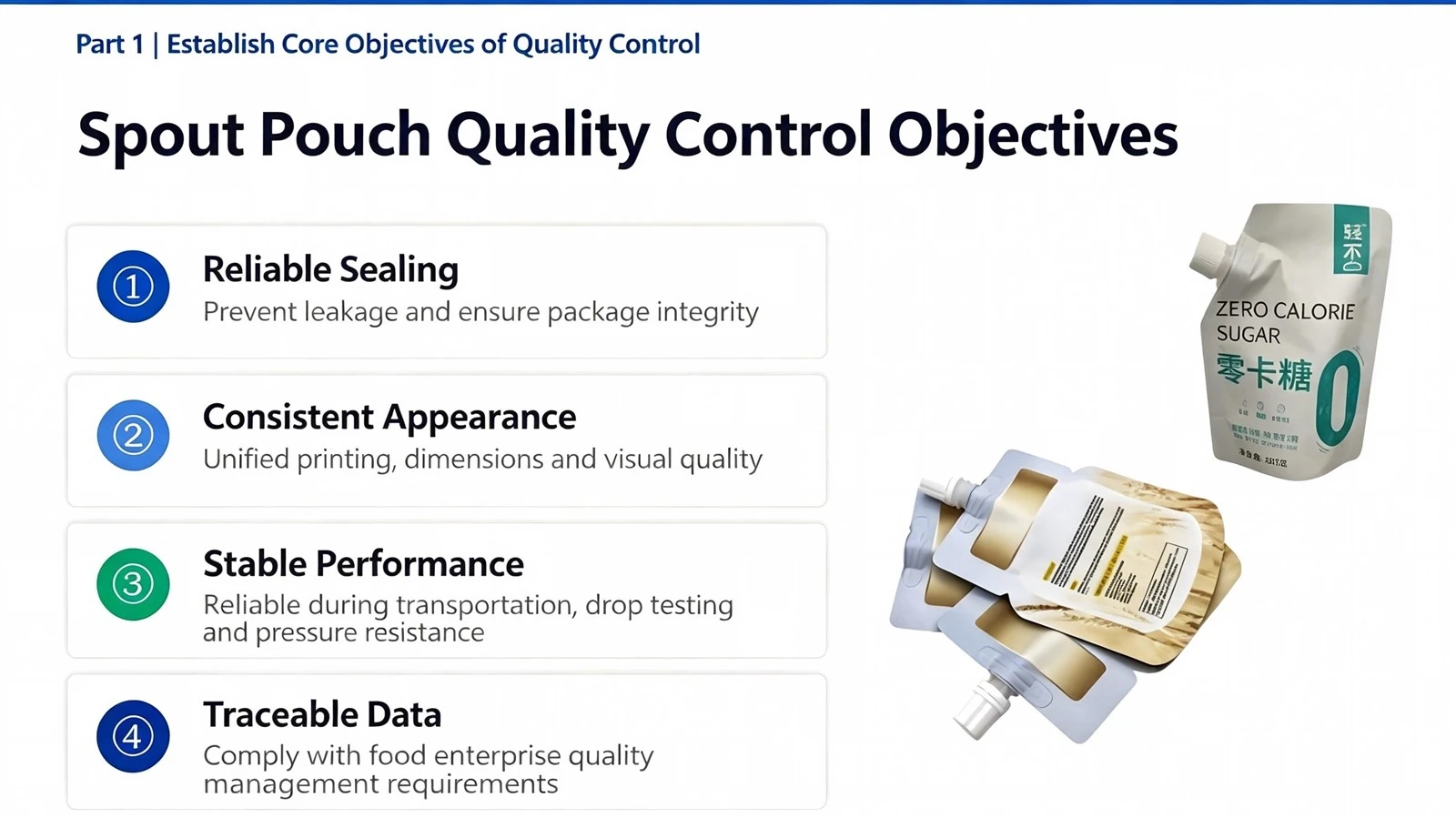
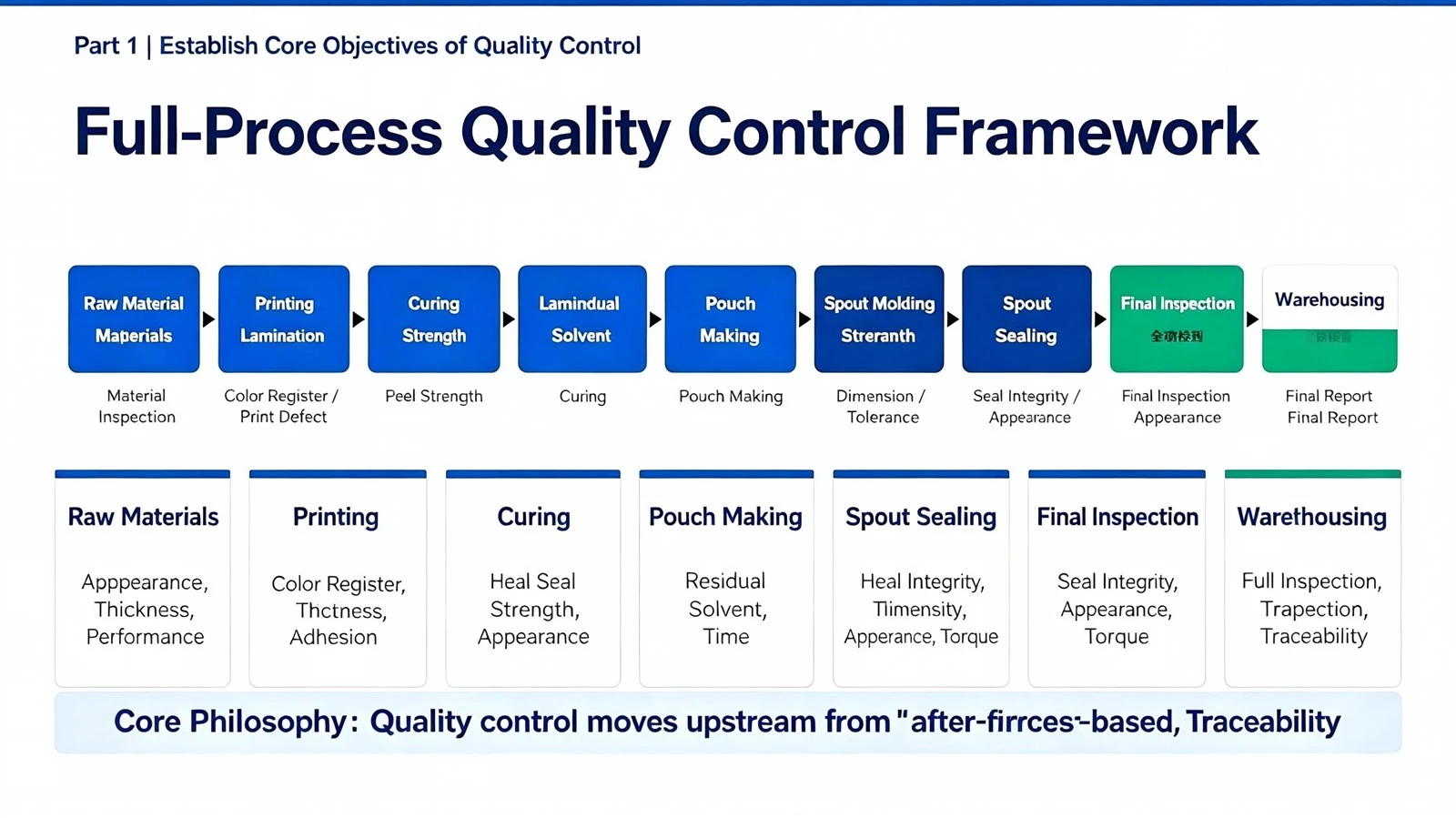
The ultimate goal of systematic quality management is to consistently produce leak-proof, well-sealed, aesthetically compliant spout pouches that meet global food-contact safety standards. We prioritize stable physical performance, hygienic safety, long-term shelf-life adaptability, and zero major defects during transportation, storage and end consumption. All control measures are designed to minimize production deviations, reduce reject rates, and deliver consistent finished quality for liquid food, beverage, sauce and nutritional product packaging.
II. Raw Material Control Determines 70% of Final Product Quality
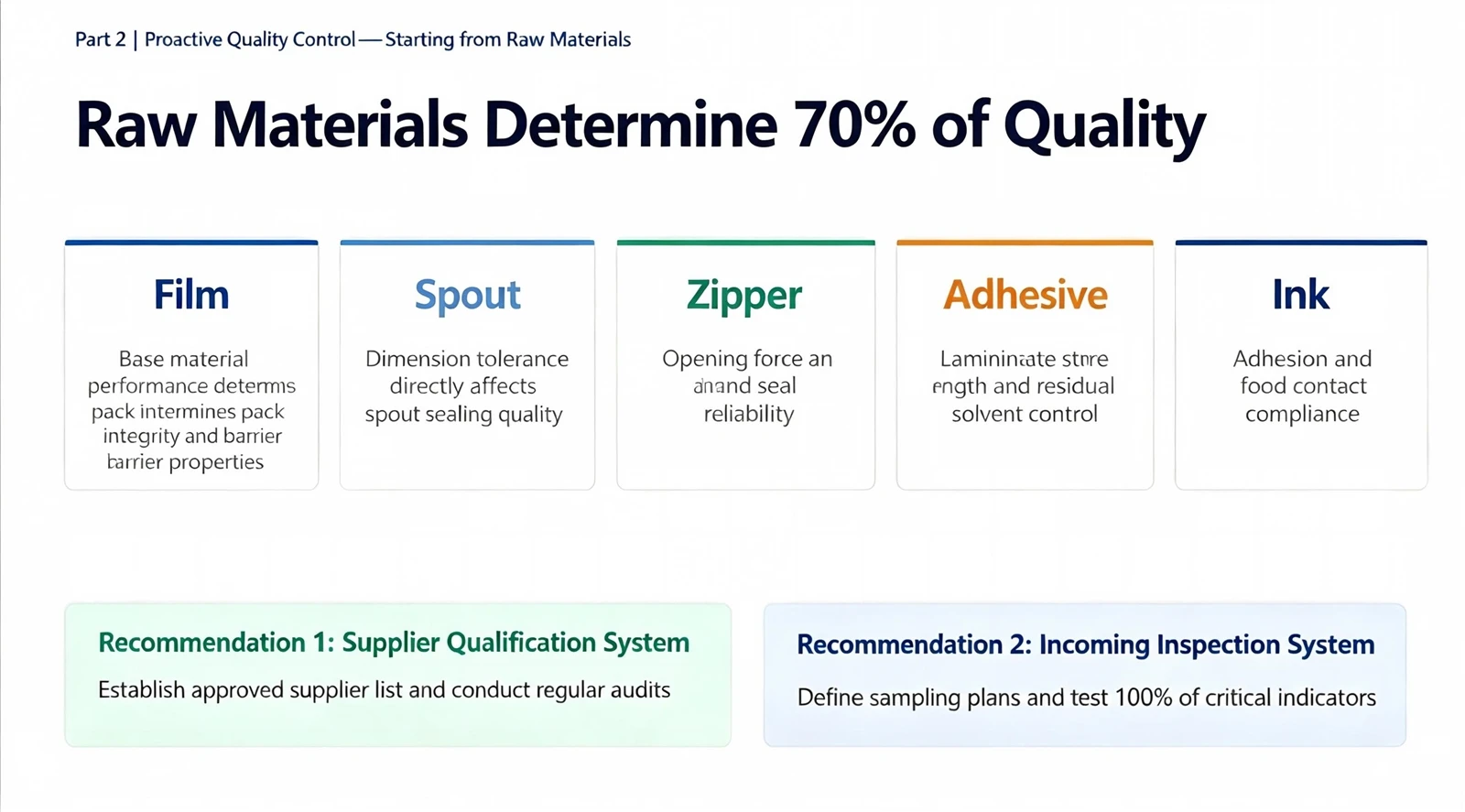
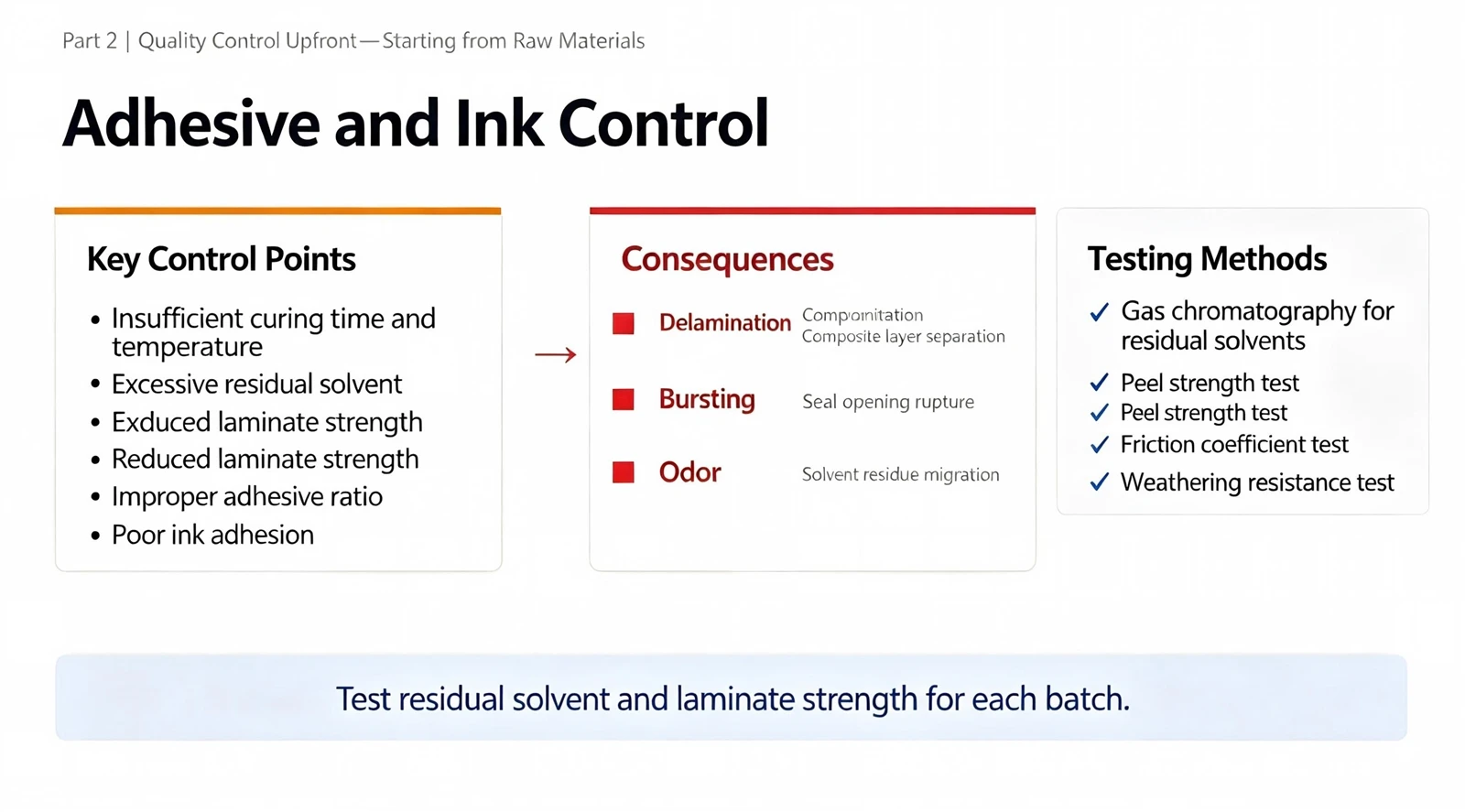
Adhesives and printing inks are high-risk auxiliary materials requiring targeted risk prevention and whole-batch monitoring.
Prevalent Quality Risks Triggered by Improper Raw Material Management
- Insufficient curing time and curing temperature
- Excessive residual solvent content
- Declined laminate bonding strength
- Poor ink adhesion to film surface
Direct Consequences on Finished Pouches
Delamination & separation of composite layers, pouch bursting, unpleasant packaging odor, blisters on heat-sealed seams, and ink peeling off printed surfaces.
Standardized Implementation Control Measures for Each Batch
- Test residual solvent content via Gas Chromatography for every incoming batch
- Conduct peel strength tests and weathering resistance verification
- Enforce strict sampling inspection standards for all cured batches before downstream processing
III. Six Core Production Processes
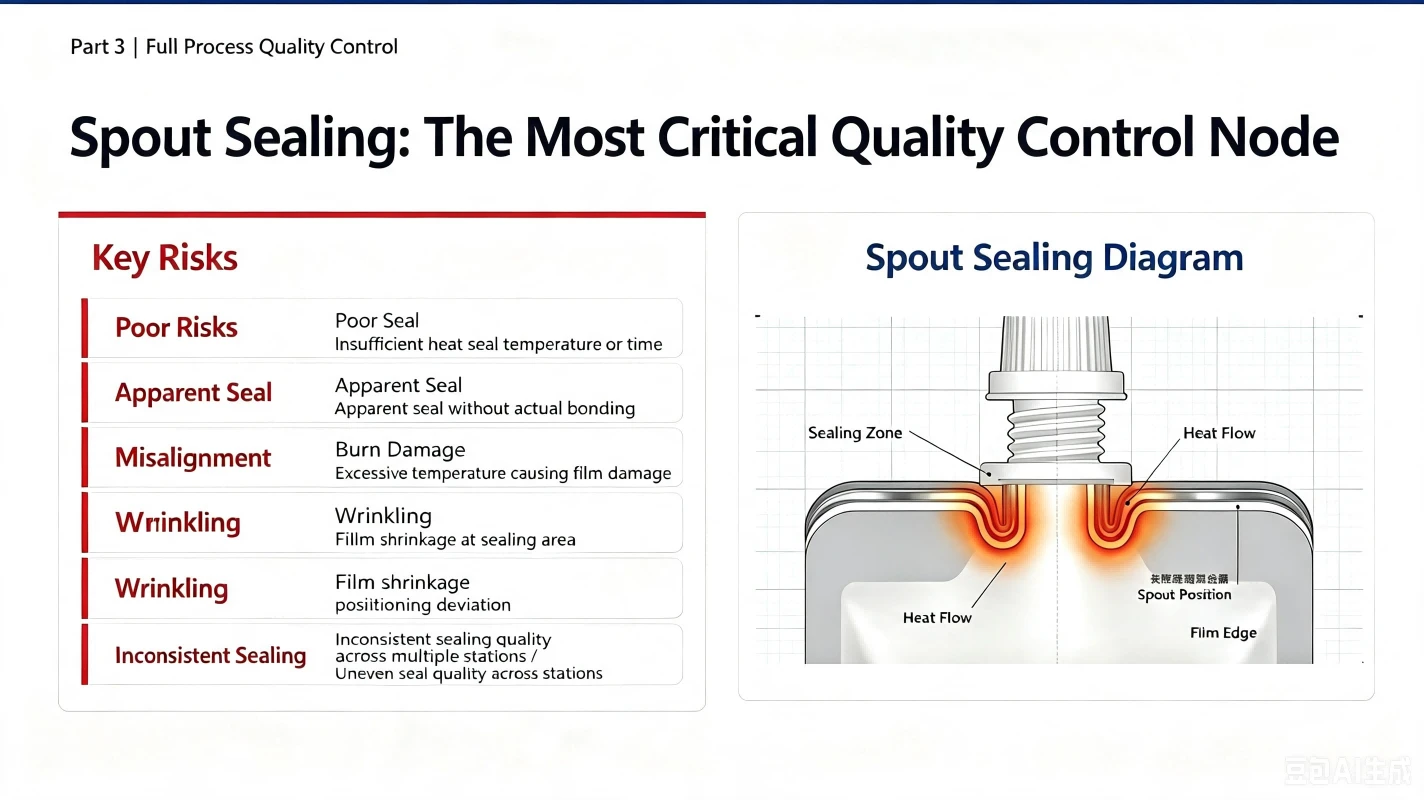
We adhere to the management philosophy: in-process control prevails over final finished product inspection. Quality checkpoints are set at every stage: gravure printing, dry lamination, curing, pouch making, spout heat sealing, and finished product inspection. Among all procedures, spout sealing is the most critical quality control node.
Common Production Defects at Spout Sealing Station
Imperfect seals (false sealing), heat seal burn damage, spout offset & misalignment, wrinkled sealing edges, inconsistent sealing quality across multiple workstations.
Root Causes of Defects
Inadequate heat sealing temperature & dwell time, positioning deviation of sealing molds, unstable temperature fluctuation, thermal shrinkage of flexible films under heat exposure.
Supporting Online Real-Time Monitoring Solutions
- High-speed visual appearance inspection system
- Infrared thermal imaging to continuously monitor sealing temperature
- Laser ranging for precise spout positioning
- SPC (Statistical Process Control) to track fluctuations of all key process parameters
IV. Defect Elimination & Continuous Improvement via Final Inspection
1. Closed-Loop Problem Rectification & Optimization Mechanism
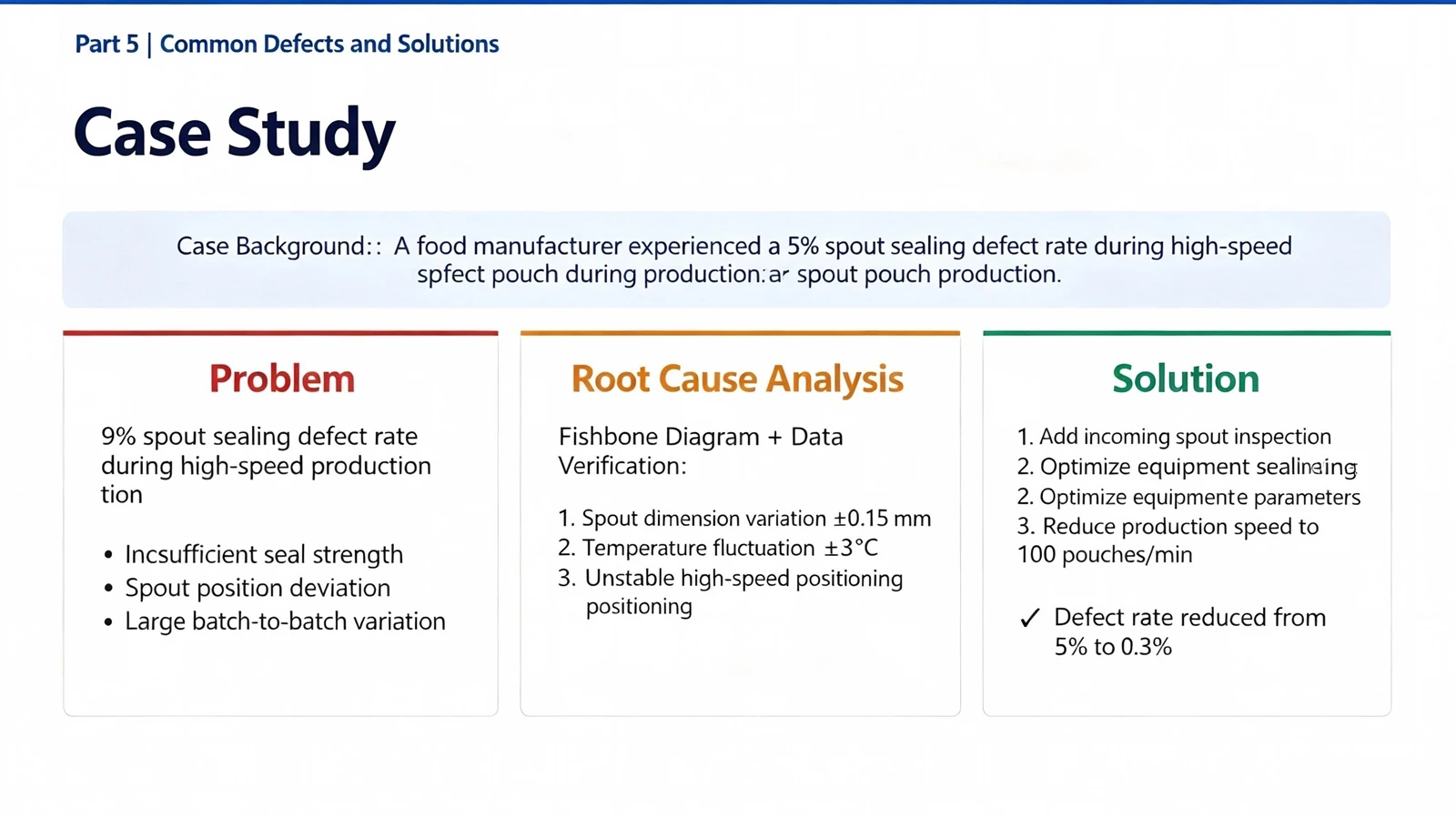
We adopt the 5M1E root cause analysis method combined with the PDCA cycle for iterative quality improvement. Supported by practical cooperation cases with food manufacturers, we successfully reduced the spout sealing defect rate from 5% down to 0.3%. We also provide complete troubleshooting solutions for frequent issues including leakage, pouch rupture and sealing failure.
2. Full Range of Spout Sealing Equipment
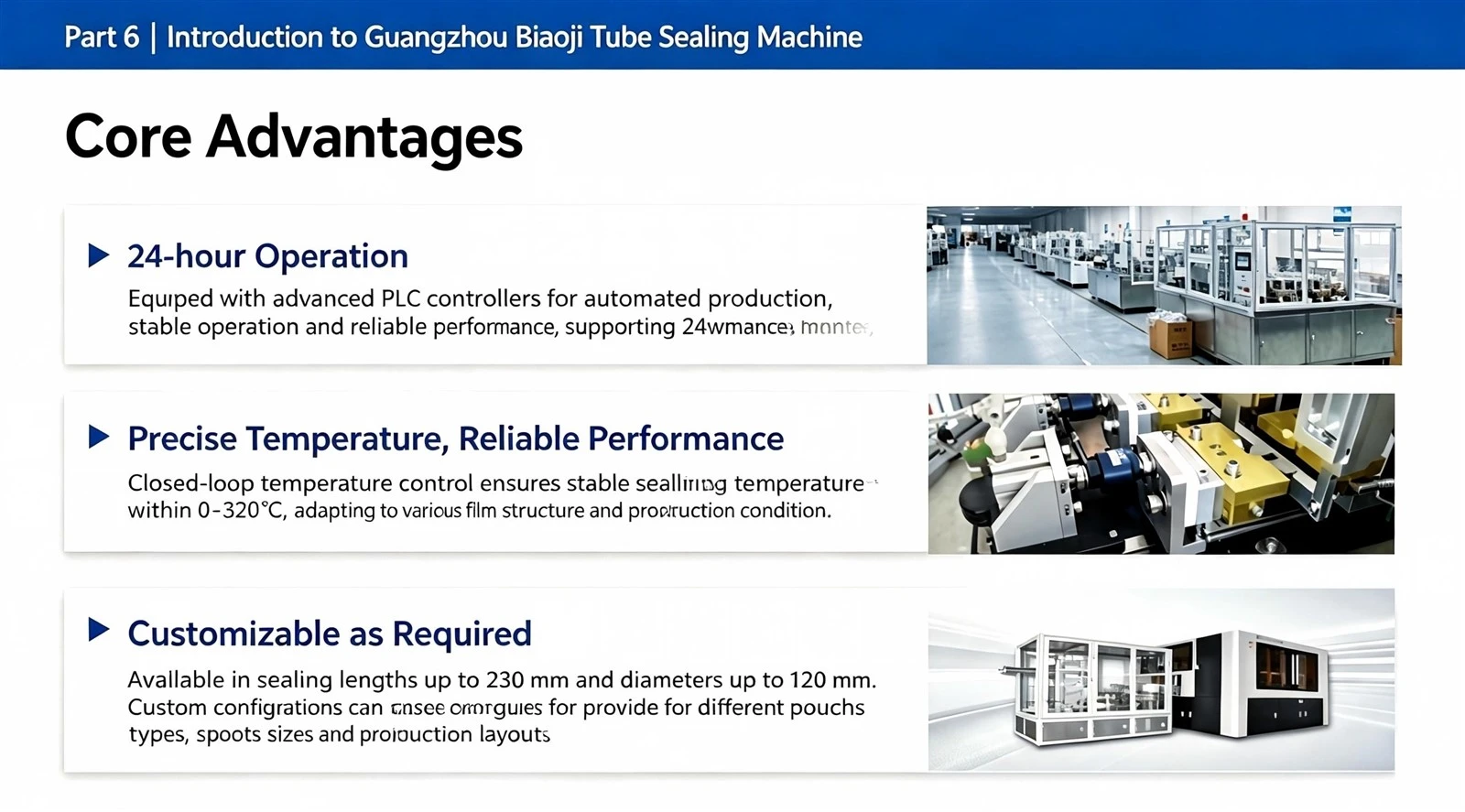
Multiple machine models are available to match factories with different production capacities. Featuring precise temperature control and stable pneumatic systems, the equipment supports 24-hour uninterrupted mass production. Customizable specifications are offered, and machines can be seamlessly connected to automatic filling production lines. We also deliver one-stop after-sales services including on-site installation, operational training, periodic inspection and equipment maintenance.