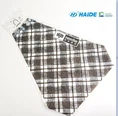
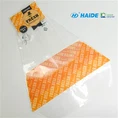

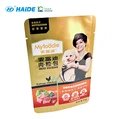
Flexible packaging serves not only as a protective container for food, daily chemical and other consumer products but also as a core carrier for brand visual identity, product information display and terminal marketing value. Modern flexible packaging must comprehensively meet the requirements of product protection, aesthetic presentation, shelf display and logistics adaptability. After the printing process, packaging films undergo a series of deep processing and circulation procedures, including lamination, hot stamping, embossing, pouch making, warehousing, transportation and retail display, covering the entire packaging lifecycle.
Color deviation or inconsistent color at any stage of production and circulation will cause finished packaging to fail to meet design standards and approved color swatches. Minor color differences lead to customer complaints and damaged brand image, while severe color distortion results in mass product rejection and order compensation, causing direct economic losses and reputational damage to packaging manufacturers. Unpredictable post-print discoloration has long been a critical quality control pain point in the flexible packaging industry.
Many flexibly packaged products with qualified printing quality tend to develop unexplainable discoloration defects during subsequent deep processing, storage and transportation, customer filling, high-temperature sterilization and long-term shelf display. This article summarizes the most common post-print color deviation failures in the industry:
1. Obvious color difference after film lamination, inconsistent with customer approved color swatches and triggering quality complaints;
2. White spots, bubbles, blackened white ink and reduced overall gloss after laminating opaque substrates such as aluminum foil and aluminum-plated film;
3. Excessively deepened tone and abnormal saturation increase after printing films are laminated with light-colored base films such as milky white film and pearlescent film;
4. Local discoloration on heat-sealed edges during pouch making, forming significant color differences between sealed areas and pouch bodies;
5. Cross-color contamination and staining on blank areas of finished pouches after stacking storage, damaging overall packaging appearance;
6. Fading, darkening and gloss loss of packaging colors after product filling due to medium erosion from contents;
7. Overall packaging discoloration and cross-staining between printed areas and blank areas after high-temperature sterilization;
8. Color abnormalities accompanied by fading, delamination and bulging during warehousing and market circulation;
9. Severe asymmetric color difference after long-term window display, with faded patterns on the front side and normal color on the back side due to UV exposure;
10. Overall tone imbalance and subtle undefinable color distortion after large-area hot stamping;
11. Visible color deviation between finished embossed films and printed proofs due to uneven embossing depth and texture differences;
12. Overall color offset and distortion of printed films after extrusion lamination;
13. Gradual darkening, blackening and metallic luster loss of gold and silver ink finishes after long-term storage.
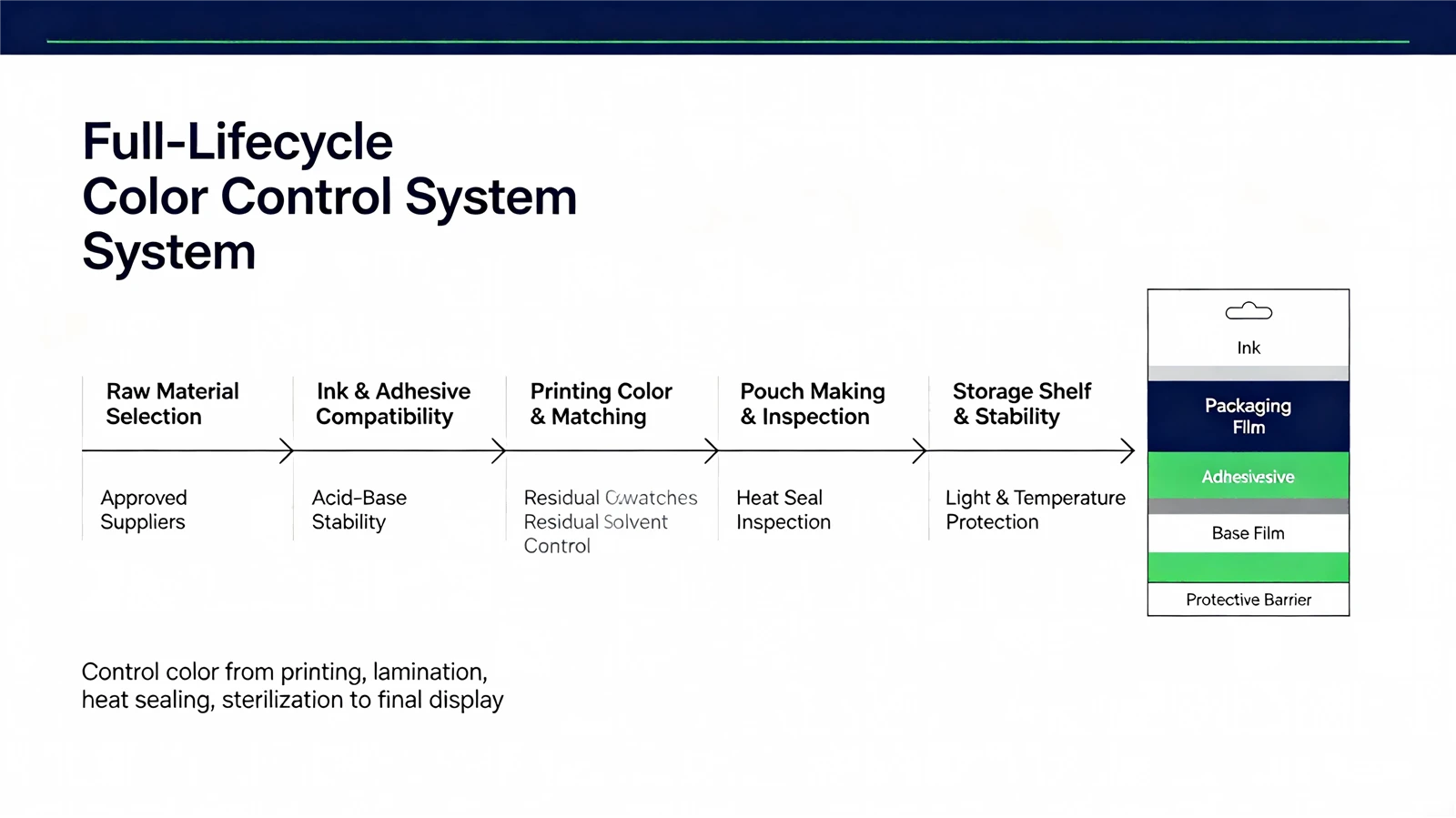
The above post-print color instability issues run through the entire industrial chain, including factory production and processing, finished product storage and transportation, customer filling and sterilization, and terminal shelf sales. This fully proves that flexible packaging color management is not limited to accurate color reproduction during printing. To achieve long-term stable and standardized packaging colors, enterprises must establish a full-lifecycle color control system covering substrate processing, post-print finishing, product circulation and end-user application.
Based on industry literature and mass production practical experience, all post-print discoloration and color difference problems of flexible packaging fall into two core categories: physical discoloration and chemical discoloration. Essentially, all color deviations result from changes in the optical properties and color-developing structures of ink layers caused by fluctuating process and environmental conditions during packaging processing, storage and application.
1. Physical Discoloration: Core Causes & In-Depth Analysis
Physical discoloration does not involve chemical structural deterioration of ink pigments. It refers to visual color differences triggered by changes in optical environments, temperature conditions and physical pigment migration, most of which are adjustable and improvable. It mainly includes three major causes: optical characteristic changes, temperature-sensitive color variation and pigment migration contamination.
1.1 Optical Discoloration (The Most Common Post-Print Color Difference Cause)
After post-print deep processing, the optical system of printed films changes, leading to differences in light refraction, reflection, transmission and diffuse reflection, and ultimately causing visible color offset. The core influencing factors cover four dimensions: substrates, laminating adhesives, processing techniques and film characteristics:
Influence of Substrates & Laminating Adhesives: The natural color, coating uniformity and light transmittance of laminating adhesives, as well as the material, thickness, gloss and transmittance of base films, completely change the underlying optical environment of printed patterns, directly resulting in overall tone deviation and uneven color development.
Optical Interference of Special Films: Functional special films such as laser film, golden sand film, brushed film, cat-eye film and crystal film have unique grating refraction effects, which interfere with the color rendering of surface printing inks and cause visual color deviation.
Color Interference from Base Substrates: Opaque and colored base materials including aluminum foil, aluminum-plated film, pearlescent film, colored film and paper substrates blend with surface printing colors, causing color distortion, hue offset and uneven color rendering.
Visual Contrast Changes from Post-Processing: Secondary processes such as hot stamping, UV varnishing, overall coating and embossing alter the surface gloss and color contrast of packaging films, forming obvious visual color differences.
1.2 Temperature-Sensitive Color Variation
Most printing ink pigments are temperature-sensitive, with their hue and saturation varying with temperature fluctuations. Temperature differences during high-temperature heat sealing, product sterilization and low-temperature warehousing affect pigment color rendering. Some temperature-induced color differences are reversible, while others cause permanent visual deviation, directly affecting batch color consistency.
1.3 Ink Pigment Migration & Cross-Color Contamination
Some ink pigments have high molecular activity. Under high-temperature, high-pressure and long-term stacking conditions during storage and transportation, pigment migration and penetration occur, contaminating blank packaging areas and causing irregular cross-color and local discoloration.
1.4 Optical Color Difference Caused by Laminating Adhesives
Easily overlooked in quality control, laminating adhesives are critical factors affecting the final color presentation of laminated packaging, with their physical properties directly determining optical color stability:
Adhesive Color & Formula Influence: Mainstream polyurethane adhesives appear light yellow to brown and form tinted films after curing, interfering with accurate color reproduction. Fluorescent whitening agents added to some water-based adhesives alter the optical reflection characteristics of ink layers, resulting in color distortion and whitish deviation.
Coating Uniformity: Uneven adhesive coating causes inconsistent light transmission and refraction of adhesive films, leading to local color difference and mottling on packaging surfaces.
Adhesive Film Gloss & Thickness: Differences in cured film thickness and gloss change the overall transmittance and refractive index of laminated structures, directly affecting the saturation, brightness and clarity of printed colors.
Interlayer Compactness: The bonding tightness between ink layers, adhesive films and base films determines the overall structural density of laminated packaging. Loose interlayer fitting alters optical reflection performance and triggers subtle batch color differences.
Influence of Bubbles & White Spots: Micro bubbles and white spots generated during lamination cause abnormal local light refraction and reflection, forming distinct color differences from normal areas and damaging overall packaging color uniformity and appearance.
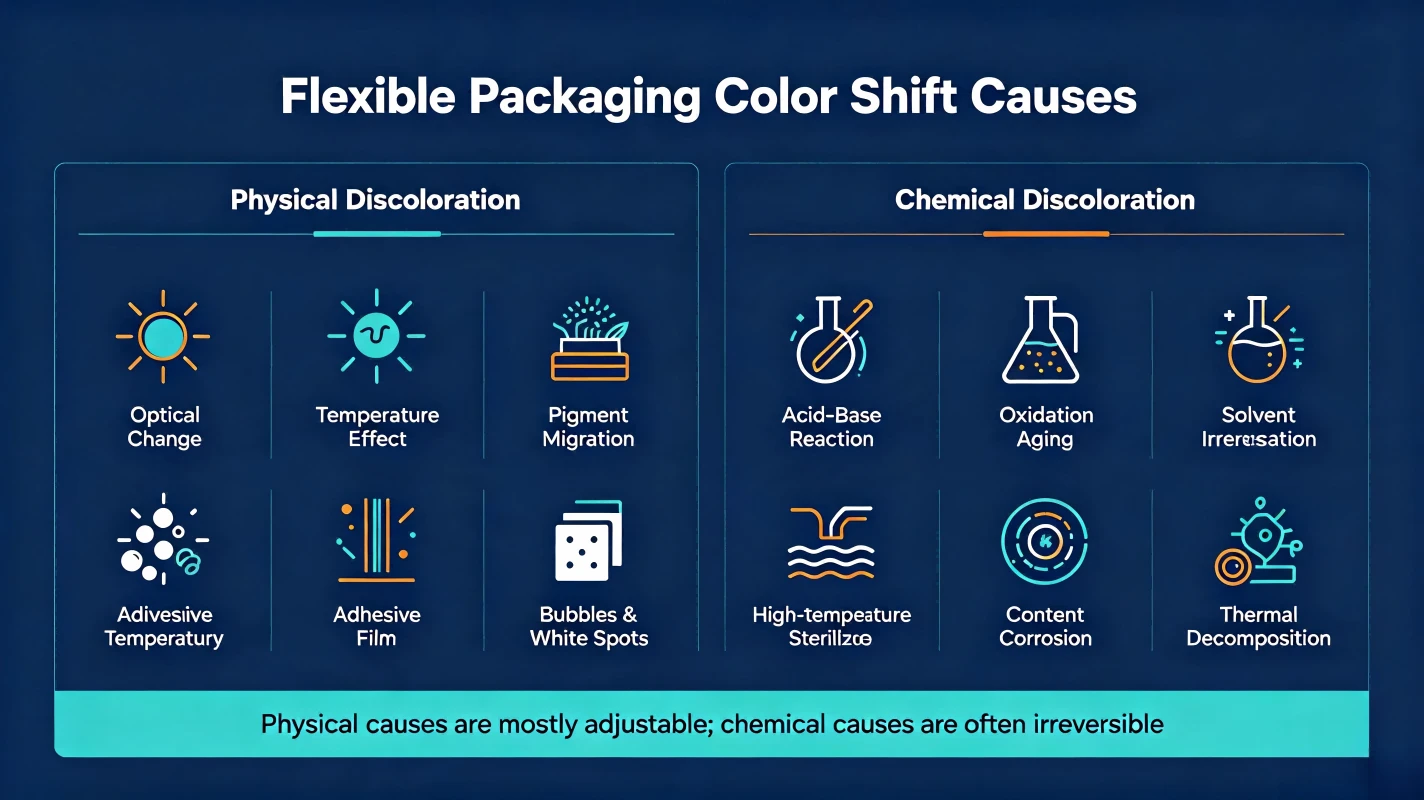
2. Chemical Discoloration: Causes of Irreversible Color Difference & In-Depth Analysis
Different from improvable physical visual color deviation, chemical discoloration refers to irreversible molecular structural deterioration of ink pigments. Affected by internal and external factors including laminating adhesives, processing additives, acid-base environments, light and oxygen exposure, product contents and high-temperature sterilization, ink pigments and resin binders undergo chemical reactions such as oxidation, acid-base neutralization, molecular decomposition, precipitation and aging. These reactions permanently destroy the inherent color-developing groups of pigments, causing fading, darkening, blackening and hue offset. Such color defects are non-reversible and constitute the main cause of mass rejection, customer complaints and order compensation. Based on industry literature and mass production practice, chemical discoloration is classified into five categories:
2.1 Pigment Degradation Caused by Acid-Base Reactions
Acid-base corrosion is the primary cause of chemical post-print discoloration. Water-based varnishes and laminating adhesives widely used in the industry are mostly weakly alkaline, while special color pigments such as fluorescent ink, royal blue and rhodamine red have poor acid and alkali resistance. Long-term coverage of ink layers by alkaline adhesive and varnish films destroys pigment molecular structures, causing color fading, yellowing, graying and hue shift. Meanwhile, acidic food contents and acidic sterilization environments corrode acid-sensitive inks and lead to decoloration. In addition, gold, silver and hot stamping layers are highly sensitive to acid-base media, prone to oxidative blackening and permanent loss of metallic luster.
2.2 Fading & Darkening Caused by Oxidative Aging
Organic pigments and resin binders in inks continuously oxidize when exposed to oxygen, ultraviolet light and high temperatures, resulting in molecular chain breakage and reduced pigment activity. Oxidative aging is the core cause of shelf fading, long-term storage darkening and circulation discoloration. Light-color and high-transparency inks with weak oxidation resistance are particularly susceptible to irreversible defects such as whitening, saturation reduction and color aging.
2.3 Solvent Residue & Ink-Adhesive Compatibility Conflict Discoloration
Insufficient curing temperature and time in printing and lamination processes lead to excessive solvent residue in inks and adhesives. Unvolatilized residual solvents continuously react with ink pigments and resins, deteriorating ink systems and causing abnormal color development. In addition, mixed use of inks, adhesives and additives from different brands and formulas easily triggers compatibility conflicts, resulting in crystallization, precipitation and delamination, which manifest as mottling, blackening and color deviation - typical hidden causes of batch color defects.
2.4 Medium Penetration & Corrosion Discoloration from Product Contents
Food sauces, beverages, dairy products and other goods contain active chemical components such as grease, polysaccharides, organic acids and preservatives. After filling, these media slowly penetrate through micro-pores of film materials, contact inner ink and composite interfaces, and continuously erode pigment and resin structures, damaging the original color development system. This explains why most packaging products show normal color before delivery but fade, cross-color and darken after long-term storage at customer sites.
2.5 Thermal Chemical Decomposition Discoloration Caused by High-Temperature Sterilization
For food packaging requiring high-temperature cooking and pasteurization, high-temperature and high-pressure conditions accelerate the thermal decomposition of ink pigments and resins. Ordinary commercial inks without high-temperature resistant modification fail and decompose at high temperatures, causing overall discoloration, mottling and yellowing. High temperatures also intensify chemical reactions between adhesives and ink layers, inducing delamination and bulging, with permanent and irreversible color damage.
3. Core Conclusion: Physical Discoloration Is Adjustable, While Chemical Discoloration Is Irreversible and Destructive
According to the full-lifecycle discoloration mechanism, physical discoloration is mainly visual optical deviation that can be effectively improved through process fine-tuning, parameter calibration and equipment optimization. In contrast, chemical discoloration is essential material deterioration with strong harmfulness and irreversibility, serving as the key factor leading to mass rejection, customer complaints and brand reputation loss. Therefore, professional flexible packaging color management is not limited to color matching during printing. Enterprises must build a full-dimensional control system covering raw material selection, ink-adhesive acid-base compatibility, curing parameter optimization, solvent residue control, temperature and medium resistance verification, and warehouse light shielding management, establishing dual physical and chemical color protection mechanisms to fundamentally eliminate all types of post-print discoloration and color difference risks.