



Visual Elements in Modern Packaging Design:
I. Holistic Expression in Design Language
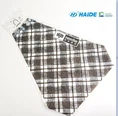
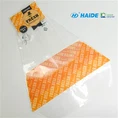
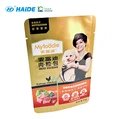
The visual elements in packaging design encompass the overall design of form, composition, color, patterns, textures, and fonts. The form determines the packaging's structural outline, composition reflects the packaging's visual style, color represents the packaging's spirit, and fonts directly reflect the essence of the packaging content. Therefore, the composition, color, and fonts of packaging design should be conceptualized simultaneously, complementing each other to achieve functional form, distinctive composition, ideal coloration, and textual imagery. The design should meet the four conditions of scientific utility, aesthetic appeal, cost-effectiveness, and competitiveness. Successful packaging design often achieves three effects: immediate attention, captivation upon closer inspection, and a lasting impression.
Additionally, successful packaging design must embody five fundamental points:
Shelf Impression: Effective design attracts customers strongly on the shelf.
Readability: Text on the packaging should be clear and easy to read, with product information presented succinctly.
Appearance Patterns: Patterns on the packaging should be aesthetically pleasing, conspicuous, meaningful, and artistic to ensure success.
Trademark Impression: The trademark should be concise, clear, and leave a lasting impression.
Functional Features Description: Information about the product's functions, features, opening methods, and precautions should be represented clearly through graphics and text.
Designs that incorporate these five fundamental points are likely to appeal to consumers, making the product more attractive. Therefore, in the process of packaging design, it is essential to focus on the overall relationship among the various design elements.
II. Text in Design
Text on packaging includes brand names, product names, item numbers, specifications, ingredients, quantity, batch numbers, usage instructions, maintenance details, production units, and transliterations or foreign languages. This information is indispensable for introducing and promoting products, especially in industries such as chemicals, instruments, pharmaceuticals, food, machinery, and educational supplies, where text plays a crucial role in identification.
Text, as a decorative technique, holds significance in design by enhancing the characteristics of the product. The decoration of text varies, invoking resonance, imagination, and memory in customers when appropriately used. By aligning with the product's characteristics, text can contribute to a unique and personalized packaging solution.
Drawing from China's rich cultural heritage, traditional Chinese calligraphy itself is an art form. In recent years, some Chinese characters, used as the main element in packaging design, have gained success, especially in local and specialty gift products. Using Chinese calligraphy as decoration, sometimes combined with seals and ancient paintings, strongly reflects a national style. Similarly, Japanese packaging design often embraces calligraphy. Therefore, leveraging the decorative beauty of text can enhance and enrich the design effect.
III. Utilization of Commercial Photography
Effective packaging not only outshines competitors on the shelf but also swiftly reflects the product's contents. In various fields like food, glassware, ceramics, exquisite goods, toys, etc., there's a growing emphasis on "realistic" images. Consumers increasingly want to grasp the actual product through packaging at a glance. Modern international markets witness an increasing use of commercial photography techniques in packaging design. This trend aligns with the emergence and development of self-service sales methods in the global market, fulfilling customers' desire to "realistically" understand products. Modern technology and the evolving field of electronic plate printing have provided means for conveying visual messages in packaging design more effectively. When coupled with clever design, they make the packaging more appealing.
IV. Abstract Imagery in Design
The use of abstract design techniques to represent specific products such as cigarettes, medicines, soaps, toothpaste, laundry detergent, mineral water, condiments, saline solution, etc., is a prominent feature of modern international packaging design. Abstract, modern, strongly stylized graphical packaging is easily accepted by people. Even for products that could be represented by concrete graphics, designers, in pursuit of visual differentiation and modern aesthetics, often opt for abstract designs.
With the advancement of science and technology, computers have become ubiquitous, and modern technical means provide diverse geometric patterns and irregular visual effects. The use of abstract language creates a specific visual effect, depicting waves, sound waves, frequencies, amplitudes, energy concentrations and dispersals, chemical reactions, and other invisible phenomena. This achieves the expression of the "visual sensory perception" of the product's essence.
Of course, abstract graphics in packaging also serve a purely decorative role, but generally, they have a meaningful design. They not only provide a sense of modern beauty but also create a subtle and artistic effect, generating associations related to the product and successfully expressing the product's intrinsic meaning.
V. Techniques of Painting, Cartooning, and Exaggerated Deformation in Design
As packaging design evolves, the question arises: Do the painting, cartooning, and exaggerated deformation techniques, frequently used in the past, still have practical value? Especially with the increasing proficiency in commercial photography and plate printing technology today, it seems that the use of realistic color photographs is indispensable in modern packaging design. However, when exploring the current state of packaging worldwide, including some well-known brands, it becomes evident that the vivid imagination and expressiveness inherent in painting, cartooning, and exaggerated deformation are still being fully utilized to pursue specific themes and individual characteristics of certain product packaging. For instance, in foreign toy packaging, space-themed video game packaging, and depictions of imaginary characters and ancient heroes, these images can't be expressed through photography alone. The uniqueness of each artistic method has different visual effects, and their usage depends on the needs of the product content and design concept.
VI. Color Treatment in Design
When customers enter a store to purchase products, color often catches their attention first. Elegant and appropriate color choices help advertise the product, beautify the environment, and uplift people's spirits-this is the power of color. The use of color in packaging is closely linked to the overall design concept and composition. Packaging color requires flatness and uniformity, achieved through careful filtration, refinement, and high-level abstraction. It demands more significant imagination beyond general visual colors. Based on people's habits and associations with color, designers need to perform high degrees of exaggeration and color alteration to better highlight the promotional effects of the product, enhancing its competitiveness.
The main color tone of packaging design should be considered based on the content of the product. Starting with the inherent color of the product, designers can use techniques such as intensification or reduction, contrast, or harmony to better highlight the promotional effect and strengthen the product's competitiveness.
The packaging image often uses the background color as the main color tone, and other colors on the image need to be arranged appropriately based on the main tone. Independent treatment of each color will lead to disorderly results, as it fails to emphasize the theme and loses the overall sense. Especially when contrasting colors appear on the image, attention should be paid to ensuring that the areas of two contrasting colors are not too similar in size. Purity or lightness should also not be too close to achieve a contrast effect (including hue, lightness, and purity contrast), ensuring both contrast and a unified feeling.
The unique nature of packaging design is closely related to market competition. In product marketing, apart from the role of advertising, it is essential to distinguish a product from others through the uniqueness of its packaging design. Throughout the entire transmission process, packaging design plays a crucial role in "self-promotion." Essentially, packaging design is a form of communication through people's visual senses. Visual elements and design language are universally understood worldwide, and with the advancement of time, the transmission of visual elements and design language has become increasingly sophisticated. Especially in countries with higher cultural and educational levels, there is a decreasing reliance on text as advertising slogans. Modern technology allows people to directly and rapidly convey images. On the one hand, consumers are becoming more knowledgeable, demanding a wider variety of colorful varieties. On the other hand, the multitude of products on the market overwhelms consumers. For designers, it is necessary to study how customers in the market psychologically differentiate between "this" product and "that" product based on the appearance of the packaging. Designers must possess the skills of visual elements and design language to captivate people's hearts effectively.