





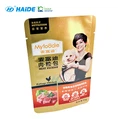
Stand-up pouches and flat bottom bags are both popular types of flexible packaging used for various products, but they have distinct differences in terms of structure, appearance, and functionality. Here's a breakdown of the key differences between stand-up pouches and flat bottom bags:
Stand-Up Pouches:
Structure: Stand-up pouches, as the name suggests, are designed to stand upright on store shelves or when placed on a surface. They have a flat bottom gusset and are often equipped with a resealable zipper or other types of closures.
Appearance: Stand-up pouches have a distinctive shape with a flat bottom and a wide top opening. This design provides ample space for branding, product information, and graphics, making them visually appealing to consumers.
Functionality: The ability to stand upright makes stand-up pouches convenient for both storage and display purposes. They are commonly used for products like snacks, beverages, pet food, and other items that need to be poured or scooped out.
Features: Stand-up pouches often come with features like resealable zippers, tear notches, and hang holes, enhancing consumer convenience and product freshness.
Flat Bottom Bags (also known as Box Pouches or Quad Seal Bags):
Structure: Flat bottom bags have a rectangular shape with a flat bottom that provides stability and allows them to stand up on their own. They are often equipped with side gussets for expansion and a top seal.
Appearance: Flat bottom bags offer a clean and professional appearance with a more squared-off shape compared to traditional stand-up pouches.
Functionality: The flat bottom design gives flat bottom bags more stability and capacity to hold larger quantities of products. They are commonly used for products like coffee, tea, grains, and powders.
Features: Flat bottom bags can also have features like resealable zippers, degassing valves (for coffee packaging), and tear notches, providing convenience and ensuring product freshness.
In summary, while both stand-up pouches and flat bottom bags are versatile packaging options, their key differences lie in their structure, appearance, and intended use. Stand-up pouches are ideal for products that require pouring or scooping, have a wide top opening, and are often used for smaller quantities of products. On the other hand, flat bottom bags are suitable for products that need to be stored in larger quantities, and they offer a more stable and squared-off appearance. The choice between the two depends on the specific product, branding requirements, and consumer preferences.