


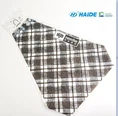
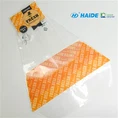

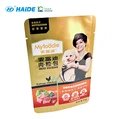
Visible high-barrier film packaging is not merely a "choice" but a necessity. It serves as the technological core that enables flexible packaging to successfully replace glass bottles and metal cans while ensuring product quality and safety. This is fundamentally determined by the chemical properties of the materials themselves and market demand.
I. Current Core Demands for Visible High-Barrier Packaging
Applications are expanding from food and pharmaceutical packaging to high-end industrial sectors such as power batteries, semiconductors, and military packaging. New double-sided transparent insulating films have entered the supply chains of ATL and CATL; products from Lucky Huaguang have been extended to flexible electronics and military packaging.
Product upgrading: evolving toward ultra-thinness (≤15 μm), multi-functional integration (barrier + antibacterial + biodegradable), and customization. Materials have achieved breakthroughs in high barrier performance, low cost, and environmental friendliness.
Dual demands in the food industry for long-term freshness preservation + visual display (e.g., extending the shelf life of chilled meat from 5 days to 21 days while allowing product visibility); requirements for transparent traceability + high-barrier protection in pharmaceuticals; and needs for flexible compatibility + visual inspection in the electronics industry.
Policy drivers: Implementation of GB/T 40266-2021 General Specification for Quality of Oxide Barrier Transparent Plastic Composite Films and Bags for Food Packaging has standardized quality requirements and promoted industrial upgrading.
Substitution potential: The replacement rate of traditional aluminum foil bags in food and pharmaceutical fields is less than 15%, with an estimated market space of 12 billion RMB in the next 3–5 years.
II. Disadvantages of Traditional Aluminum Foil Bags
1. Functional Deficiencies
① Opaque and non-visible: Consumers cannot directly observe internal product conditions (e.g., spoilage of fresh food, damage to medicines), and brands struggle to showcase product quality, negatively affecting purchasing decisions.
② Poor mechanical properties, prone to rupture and failure: Aluminum foil is brittle and difficult to laminate. Cracking rates exceed 30% at temperatures below −10°C. During transportation, extrusion and bending easily break the aluminum layer, causing barrier performance to collapse (oxygen and water vapor transmission rates increase by more than 100 times instantly).
③ Insufficient adaptability and limited applications: Narrow heat-sealing temperature window (only ±5°C), with a line jamming rate up to 15%, failing to meet high-speed automated production. It is incompatible with microwave heating and vacuum skin packaging, restricting use in prepared dishes and ready-to-eat foods.
2. Cost and Environmental Deficiencies
① High overall cost: Volatile aluminum raw material prices, complex multi-step lamination processes, and a production scrap rate of 10%. Although unit price is lower than high-end visible high-barrier bags, the total cost is 20%–30% higher due to severe cargo damage (annual losses in the food industry from aluminum foil bag damage exceed 10 billion RMB).
② Difficult recycling and high environmental compliance risks: Aluminum-plastic composite layers are hard to separate, with a recycling rate below 5%, failing to meet EU REACH regulations and China's "dual carbon" policies. In contrast, visible high-barrier bags use a mono-polymer system that is 100% recyclable, avoiding environmental penalties.
③ Production and supply risks: Aluminum foil relies on imported raw materials and is highly affected by international aluminum price fluctuations. Since 2025, many enterprises have seen production costs rise by 15%–20% due to aluminum price hikes. Raw materials for visible high-barrier bags (EVOH, PA, etc.) have a domestic self-sufficiency rate of 85%, ensuring stable supply.
3. Technological Iteration Deficiencies
① Limited performance upgrade potential: Barrier performance of aluminum foil bags has reached a bottleneck and cannot meet demands in new energy and flexible electronics for ultra-thinness (≤20 μm) + high barrier (OTR ≤ 10⁻³ cc/ .
.
② Lagging process innovation: Traditional aluminum foil lamination emits volatile organic compounds (VOCs), inconsistent with green production trends. Visible high-barrier bags adopt eco-friendly processes such as co-extrusion and PECVD with zero pollutant emissions.
III. Process Solutions for New High-Barrier Films
To further enhance the barrier performance of transparent high-barrier films (comparable to aluminum foil), two deposition-coating combined models are adopted:
1. ALOxPET (Vacuum Aluminum-Coated PET Film) + PVA (Polyvinyl Alcohol) Deposition-Coating ProcessThis composite technology combines physical vapor deposition (PVD) aluminum layer + wet-coated PVA barrier layer to form a sandwich structure: PET substrate – nano-aluminum layer – PVA functional layer. The core logic is to use the excellent oxygen barrier of the aluminum layer (OTR ≤ 0.1 cc/ and the strong water vapor barrier of modified PVA coating (WVTR ≤ 0.3 g/
 for synergistic effect. The PVA layer fills micro-pores in the aluminum layer, solving oxidation and performance degradation of pure aluminum-coated films, achieving high transparency + high barrier + high stability.
Barrier mechanism: multi-path effect. Gas molecules must penetrate the hydrogen-bond network of PVA, the dense aluminum layer, and the PET substrate in sequence, greatly extending diffusion paths. Barrier performance is 3–5 times higher than single aluminum or PVA coating, with dual barrier values below 0.05.
|
Process Stage |
Key Parameter |
Control Range |
Function |
|
Vacuum Metallizing |
Vacuum Degree |
10-3 ~ 10-4 Pa |
Ensure uniform and dense aluminum layer, reduce pinholes |
|
Aluminum Layer Deposition |
Aluminum Layer Thickness |
50~100nm |
Balance barrier property and transparency, light transmittance ≥85% |
|
PVA Coating |
Solid Content of Coating Liquid |
5%~8% |
Guarantee good film-forming property and avoid sagging defects |
|
Drying & Curing |
Maximum Temperature |
≤100∘C |
Prevent PET substrate deformation and preserve PVA performance |
|
Coating Thickness |
Dry Film Thickness |
1~3 um |
Balance barrier property and film flexibility |
Key Process Parameters & Steps
① Substrate Pretreatment (ALOxPET Preparation)
Use 12 μm biaxially oriented PET film. Plasma cleaning (100–200 W) removes surface contaminants and raises surface tension to ≥42 mN/m, improving aluminum adhesion.
Vacuum aluminum evaporation: At 10⁻³–10⁻⁴ Pa, aluminum wire is heated to 1200–1400°C and deposited as a 50–100 nm nano-aluminum (ALOx) layer. Light transmittance is controlled ≥85% to maintain transparency.
Aluminum layer post-treatment: Ion bombardment optimizes compactness, reducing pinhole rate to ≤0.1 pcs/cm².
② PVA Coating Preparation & Application
Coating formulation: PVA (polymerization degree 1700–2000) mixed with deionized water at 5%–8% mass ratio; 2%–5% nano-montmorillonite (MMT) or silica filler added for mechanical and barrier performance; 0.3%–0.5% glycerol as plasticizer. Mixture filtered through 1 μm membrane.
Wet coating: Micro-gravure or slot-die coating, with dry film thickness 1–3 μm (thickness deviation ≤±0.1 μm).
Drying & curing: Three-stage oven at 60°C, 80°C, 100°C, total drying time 30–60 seconds, promoting cross-linking and dense hydrogen-bond network.
③ Post-Treatment & Performance Optimization
Surface modification: Low-temperature plasma treatment (50–100 W) improves slip and heat-seal compatibility.
In-line inspection: Real-time coating thickness monitoring via infrared gauge; sampling tests for OTR/WVTR.
Winding: Tension 50–60 N to avoid stretching; finished roll diameter ≤600 mm for bag making.
2. Nylon (Vacuum Silicon Oxide Coating) + PVA Deposition-Coating ProcessA composite process where SiOₓ (silicon oxide) inorganic barrier layer is vacuum-deposited onto biaxially oriented nylon (BOPA) film, followed by modified PVA organic high-barrier coating. Core concept: inorganic compactness (SiOₓ) + organic high barrier + complementary water resistance, greatly improving oxygen/moisture/aroma retention, widely used in food, pharmaceutical, and electronic high-barrier packaging.
(1) Core Positioning & PrincipleMain goal: Solve the sharp barrier drop of pure nylon under high humidity, poor water resistance of pure PVA, and brittleness of pure SiOₓ, achieving transparency, high barrier, water resistance, flex resistance, and environmental compatibility.
(2) Mechanism of Action
SiOₓ layer: Nano-dense inorganic film providing basic oxygen/moisture barrier, heat and chemical resistance, compensating for PVA's weak moisture barrier. Compactness and adhesion depend on vacuum level, oxygen flow, evaporation rate, and substrate temperature.
PVA layer: Highly crystalline polyhydroxy structure delivering superior oxygen barrier (better than EVOH/PVDC under dry conditions), while protecting and toughening the SiOₓ layer and repairing defects. Water resistance and oxygen barrier depend on solid content, cross-linking degree, and drying temperature/speed.
Synergistic effect: SiOₓ provides water resistance; PVA provides oxygen barrier, forming an inorganic skeleton + organic filling dual-layer system. Proper surface activation of SiOₓ ensures no craters or delamination of PVA coating.
Complete Deposition-Coating Process FlowSilicon Oxide (SiOₓ) Deposition – Key Controls
|
Process Stage |
Key Parameter |
Control Range |
Function |
|
Vacuum Metallizing |
Vacuum Degree |
10-2 ~ 10-5 Pa |
Ensure uniform and dense aluminum layer, reduce pinholes |
|
Silicon Deposition |
Coating Thickness |
40~100nm |
High-purity SiO2 or Si particles (deposited via oxygen reaction) |
|
Drying & Curing |
Maximum Temperature |
≤80∘C |
Prevent BOPA substrate deformation and preserve PVA performance |
|
Coating Thickness |
Dry Film Thickness |
1~3 um |
Balance barrier property and film flexibility |
|
Nylon Film Pretreatment |
Corona Treatment / Surface Cleaning |
Surface tension (≥40 mN/m) / Dry & clean surface |
Improve adhesion of metallized layer & coating; remove oil stains and moisture to avoid pinholes and peeling of coating |
① Substrate Pretreatment (BOPA Film)
Corona treatment to raise surface tension ≥40 mN/m for enhanced adhesion.
Cleaning and drying to remove oil and moisture, preventing pinholes and delamination.
② Modified PVA Coating – Coating Stage
Coating solution: PVA resin + cross-linking agent (glyoxal, boric acid, etc.) + nano-filler (montmorillonite) + water, formulated as 5%–10% solid content aqueous solution to improve water resistance and adhesion.
Coating method: Gravure kiss coating or micro-gravure coating (dry basis 0.5–0.8 g/m²).
Drying & cross-linking: Multi-stage hot-air drying at 80–120°C, achieving water-insoluble, highly crystalline barrier layers.
Aging: 40–50°C for 4–6 hours to enhance interlayer adhesion.
③ Post-Treatment & Lamination (Optional)
Corona or primer treatment on PVA layer facilitates subsequent printing and lamination (PE/PP).
Aging and slitting to produce finished films as required.
IV. Future Market for New High-Barrier Films
Food sector: Surging demand for chilled meat, prepared dishes, and high-end snacks. Demand reached 3.334 million tons in 2025 and will exceed 5 million tons by 2030, with transparent high-barrier packaging penetration rising from 15% to 40%.
New energy sector: Annual growth over 30% for power battery insulation packaging and flexible solar cell encapsulation, reaching a market size of 4.5 billion RMB by 2030 (16% share).
Semiconductor/electronics sector: Driven by domestic substitution, chip packaging and flexible OLED packaging will reach 3.8 billion RMB by 2030, with barrier requirements upgraded to OTR ≤ 10⁻³ cc/ .
.
Strengthening environmental policies: EU CBAM and China's dual carbon policies boost packaging recycling rates. Mono-polymer transparent high-barrier materials, which are 100% recyclable, enjoy growing policy advantages over aluminum foil bags (recycling rate <5%).
Consumption and industrial upgrading: Demand for loss reduction and preservation in food (global food waste rate 1/3; high-barrier packaging reduces waste by 30%), cold-chain traceability in pharmaceuticals, and flexibility in electronics drive high-end product development.
V. Future Competitiveness & Advantages of New High-Barrier Films
Production side: Intelligent lines reduce energy consumption and scrap rates. Yongzhi Zhiyuan's digital transformation leads the industry in energy efficiency, with intelligent workshop yield ≥95%.
Overall cost: Although unit price is 10%–15% higher than aluminum foil bags, total cost is 28%–35% lower due to reduced damage rate (from 8% to 2%) and improved line efficiency (jamming rate from 15% to 3%), showing outstanding cost performance.
Environmental performance: Mono-polymer recyclable system, zero VOC emissions, compliant with FDA, EU REACH, and GB/T 40266-2021, avoiding environmental penalties.
Compliance advantages: Certified by ISO9001, QS, FDA, etc., meeting strict safety standards for food, pharmaceuticals, and electronics. Products such as Cailong New Materials have FDA certification for barrier-free exports.
Excellent barrier performance: OTR ≤ 0.05 cc/ , WVTR ≤ 0.2 g/
 , far exceeding single ALOxPET or PVA coating, suitable for high-end food and pharmaceutical packaging.
Balanced transparency and stability: Nano-aluminum design + PVA protection ensure light transmittance ≥82%. PVA isolates oxygen and moisture to prevent aluminum oxidation, maintaining stable barrier performance for over 18 months.
Balanced environmental and cost benefits: Water-based PVA coating (zero VOCs), recyclable mono-polymer system aligning with dual carbon goals. Equipment investment is 40%–50% lower than PECVD, suitable for medium-to-high-end mass production.
Reliable mechanical properties: PVA-aluminum-PET adhesion ≥1.5 N/15 mm (T-peel strength); tensile strength ≥25 MPa; elongation at break ≥150%; excellent flex resistance (no aluminum cracking after 100 folds at 180°).
Application advantages:
Dual-layer synergy delivers superior oxygen and moisture barrier.
Solvent-free and recyclable, replacing non-environmental materials such as PVDC.
Solves PVA's water sensitivity and SiOₓ's brittleness for improved water and flex resistance.
Low PVA coating weight and thin SiOₓ layer ensure controllable cost and high cost performance.
VI. Application Scenarios
Food packaging: Chilled meat, prepared dishes, high-end snacks (nuts, baked goods), extending shelf life by 2–3 times.
Pharmaceutical packaging: Oral solid medicines and health products, meeting moisture-proof, oxygen-barrier, and transparent traceability requirements.
Electronic packaging: Vacuum packaging for chips, sensors, and small components, combining high barrier and visual inspection.
VII. Process Challenges & Improvement Directions
1. Challenges
① Improving PVA water resistance relies on complex cross-linking with strict process control.
② Weak interfacial adhesion and cratering easily occur between SiOₓ and PVA.
③ Difficulty controlling uniformity and stability in large-scale production.
2. Improvements
① Develop self-crosslinking PVA and nano-composite coating solutions.
② Optimize SiOₓ surface activation and primer coating processes.
③ Adopt in-line closed-loop inspection to enhance film thickness uniformity and stability.